
Last updated: 27 October 2026 | Author: Dr. Prashant Tyagi (Stem Cell Biotechnology Specialist, 10+ years) and Dr. B. N. Singh (General Physician, MBBS MS General Surgery, 30+ years)
The optic nerve carries visual signals from the retina to the brain. When it is damaged by disease, injury, inflammation or reduced blood supply, vision can fall, colours can look washed out, and parts of the visual field can go missing. Because nerve cells do not regenerate easily, optic nerve damage is one of the harder eye conditions to treat. This guide explains the common causes, what standard care in India looks like, and where stem cell therapy is being studied, so you can ask informed questions before making any decision.
What Is Optic Nerve Damage?
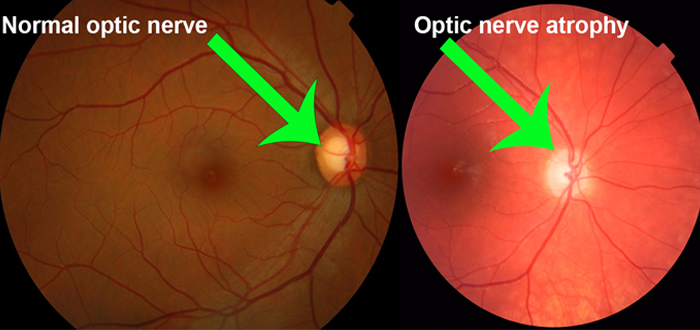
Each optic nerve contains over a million nerve fibres (axons) from retinal ganglion cells. Damage to these fibres, called optic neuropathy, interrupts the signal to the brain. If the nerve becomes pale and thin over time, doctors call this optic atrophy. You can read more about that stage on our optic nerve atrophy treatment in India page.
Common Causes of Optic Nerve Damage
| Cause | What happens | Usual standard approach |
|---|---|---|
| Glaucoma | High eye pressure damages nerve fibres slowly | Pressure-lowering drops, laser or surgery |
| Optic neuritis | Inflammation of the nerve, often linked to autoimmune disease | Steroids in selected cases, investigation for MS and related disorders |
| Ischaemic optic neuropathy | Reduced blood supply to the nerve | Control of BP, diabetes, cholesterol; specialist review |
| Traumatic optic neuropathy | Head or eye injury | Individualised; decompression or steroids in selected cases |
| Compressive causes | Tumour or swelling pressing on the nerve | Treating the underlying lesion |
| Hereditary optic neuropathies | Genetic conditions such as LHON or dominant optic atrophy | Supportive care, genetic counselling |
| Toxic or nutritional | Certain drugs, alcohol, deficiencies (e.g. B12) | Remove the cause, correct deficiency |
Symptoms to Watch For
- Blurred or reduced vision that glasses do not correct
- Dull or faded colours, especially red
- Missing patches or a narrowed field of vision
- Pain on eye movement (common in optic neuritis)
- One pupil reacting more weakly to light than the other
Sudden vision loss is an emergency. Please see an ophthalmologist immediately, because some causes are time-sensitive.
How Optic Nerve Damage Is Diagnosed
- Visual acuity and colour vision testing
- Visual field test (perimetry)
- OCT scan to measure nerve fibre layer thickness
- Visual evoked potential (VEP)
- MRI of brain and orbits when inflammation, compression or demyelination is suspected
- Blood tests for deficiencies, infection and autoimmune markers
Standard Treatment for Optic Nerve Damage in India
Treatment depends on the cause, and finding the cause is the first priority. Pressure control in glaucoma, treatment of inflammation in optic neuritis, correction of nutritional deficits and management of blood pressure and diabetes are the foundation. Low-vision aids and rehabilitation help patients make the best use of remaining sight. Established nerve regeneration treatment does not yet exist, which is why researchers are studying neuroprotective and cell-based approaches.
Where Stem Cell Therapy May Fit
Mesenchymal stem cells (MSCs) are studied for their anti-inflammatory and neuroprotective signalling, which may help support surviving nerve cells. Early studies are small, protocols differ, and large controlled trials are still needed. Our team offers an evaluation to explain whether your case fits what is currently being explored. Read more about the cells on our mesenchymal stem cell therapy page, or see our service page for optic nerve damage.
Who Can Be Evaluated?
| Situation | Typical approach |
|---|---|
| Stable optic neuropathy with some surviving vision and a confirmed cause | May be evaluated after report review |
| Active inflammation, rising eye pressure or an untreated underlying cause | Treat and stabilise with your ophthalmologist first |
| No light perception for a long time with severe atrophy | Expectations must be very limited; individual opinion only |
| Active infection, cancer or uncontrolled systemic illness | Generally not suitable until resolved |
Reports to Share for an Initial Opinion
- Latest OCT (RNFL and macula) and visual field reports
- MRI brain/orbit report and films, if done
- VEP report
- Diagnosis summary, treatments tried so far and current medicines
- Past eye examination records showing the trend
Share Your Reports for a Free Opinion
Evaluation Process at Stem Cell Cure India
- Online report review and initial opinion
- In-person consultation and discussion of goals and limits
- Diagnostic work-up repeated where needed
- Treatment planning only if you are found suitable
- Follow-up in coordination with your own ophthalmologist; see post-treatment care
Risks and Limitations
- Outcomes vary and cannot be guaranteed; some patients may notice no change.
- Stem cell use for this condition is investigational under current Indian regulatory guidelines.
- As with any injection, there can be pain, redness, mild fever or infection risk.
- Insurance usually does not cover experimental therapy.
Cost Guidance
| Factor | How it affects cost |
|---|---|
| Cause and severity | Decides tests and treatment plan |
| Number of sessions and cell dose | Part of the package quote |
| Length of stay | Usually 7 to 10 days |
| Travel, visa and attendant | Relevant for international patients; see medical visa process |
Packages are quoted after your reports are reviewed.
Frequently Asked Questions
Can optic nerve damage be cured?
Currently there is no proven treatment that fully restores a damaged optic nerve. Treating the cause early protects remaining vision, and stem cell therapy is still investigational.
Is optic nerve damage reversible?
It depends on the cause. Vision after optic neuritis often recovers partly, while glaucomatous or atrophic damage is usually permanent.
What is the best treatment for optic nerve damage in India?
The best option depends on the cause: pressure control for glaucoma, steroids and immune work-up for neuritis, nutritional correction, or surgery for compression. A neuro-ophthalmologist should guide this.
Can stem cells repair the optic nerve?
Researchers are studying whether stem cells can protect or support nerve cells, but this is not yet proven in large trials.
How long does the evaluation take?
Report review is usually quick. If you travel, most patients stay 7 to 10 days.
Do I need to stop my current medicines?
No. Continue your prescribed treatment and inform us of everything you take.
Get Expert Opinion on Your Reports
Official References
- National Eye Institute: Glaucoma
- American Academy of Ophthalmology: Optic Neuritis
- Mayo Clinic: Optic Neuritis
- Clinical Trials Registry, India (CTRI)
- ISSCR: A Closer Look at Stem Cells
Related Readings









The entire team was polite, supportive, and well-coordinated. I felt comfortable throughout the process and appreciated the personal attention and guidance provided by the staff. Overall, I am very happy with my experience at **Stem Cell Cure India** and would definitely recommend **Dr. Prashant Tyagi and his team** to anyone looking for professional and compassionate care.

The staff was also courteous, cooperative, and always willing to help. I truly appreciate the professionalism and personal attention provided throughout the journey. Overall, I had a very positive experience with **Dr. Prashant Tyagi and the entire Stem Cell Cure India team**. Highly recommended for their professional approach and supportive care.






I advise everyone to come and take a chance if suffering with this disease.
Thanks