Introduction
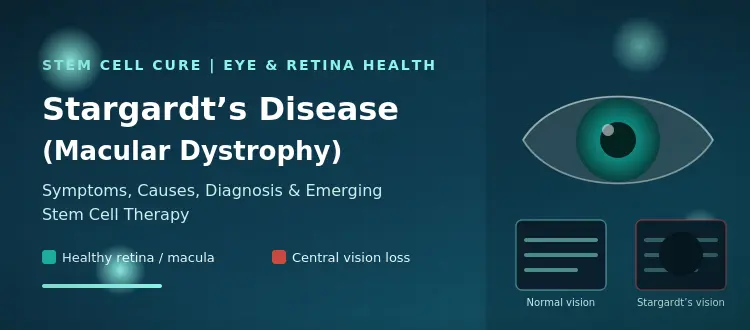
Stargardt’s Disease, also known as Stargardt Macular Dystrophy Treatment in India is an inherited retinal disorder that primarily affects the macula, the central part of the retina responsible for sharp and detailed vision. It is one of the most common forms of juvenile macular degeneration and often develops during childhood, adolescence, or early adulthood. As the disease progresses, individuals may experience gradual loss of central vision, making everyday activities such as reading, driving, recognizing faces, and using digital devices increasingly difficult.
Although there is currently no permanent cure for Stargardt’s Disease, early diagnosis, low-vision rehabilitation, and supportive eye care can help patients maximize their remaining vision. Stem cell therapy is an emerging area of regenerative medicine that is being researched for its potential to support retinal repair and preserve visual function in selected patients.
What Is Stargardt’s Disease?
Stargardt’s Disease is a genetic retinal disorder caused by damage to the light-sensitive cells within the macula. The condition most commonly results from mutations in the ABCA4 gene, leading to the accumulation of fatty waste material (lipofuscin) inside retinal cells. Over time, these deposits damage the retinal tissue and reduce central vision.
Unlike age-related macular degeneration, Stargardt’s Disease usually develops at a much younger age and primarily affects central vision while peripheral vision often remains relatively preserved.
Causes of Stargardt’s Disease
The condition is mainly caused by inherited genetic mutations. Common causes and risk factors include:
- Mutations in the ABCA4 gene
- Inherited genetic disorders
- Family history of retinal diseases
- Rare mutations in other retinal genes
- Autosomal recessive inheritance pattern
Since the disease is inherited, genetic counseling may be beneficial for affected families.
Common Symptoms
Symptoms usually develop gradually and may include:
- Blurred central vision
- Difficulty reading small print
- Trouble recognizing faces
- Dark or gray spots in central vision
- Reduced color perception
- Increased sensitivity to bright light
- Slow adaptation between light and dark environments
- Difficulty performing detailed visual tasks
- Progressive central vision loss
The rate of progression varies from one individual to another.
Diagnosis
A retina specialist may recommend several tests to confirm the diagnosis, including:
- Comprehensive eye examination
- Visual acuity testing
- Dilated retinal examination
- Optical Coherence Tomography (OCT)
- Fundus photography
- Fundus autofluorescence imaging
- Fluorescein angiography when required
- Electroretinography (ERG)
- Genetic testing
Early diagnosis allows appropriate monitoring and personalized vision care.
Stem Cell Therapy for Stargardt’s Disease
Stem cell therapy is an emerging field of regenerative medicine being investigated for inherited retinal diseases such as Stargardt’s Disease. Researchers believe stem cells may help support damaged retinal tissue by reducing inflammation, promoting the release of neuroprotective growth factors, and creating a healthier retinal environment.
Before treatment, patients undergo a detailed ophthalmic evaluation to determine whether they are suitable candidates. Stem cell therapy is generally integrated with conventional eye care, low-vision rehabilitation, nutritional counseling, and regular follow-up.
Although ongoing research has shown encouraging findings in selected patients, stem cell therapy is not considered a guaranteed cure for Stargardt’s Disease. Treatment outcomes depend on disease severity, remaining retinal function, genetic factors, and individual patient response.
Potential Benefits of Stem Cell Therapy for Stargardt Macular in India
Depending on the patient’s condition, potential benefits may include:
- Supports retinal cell health
- May preserve remaining central vision
- Supports retinal tissue repair mechanisms
- May improve visual function in selected patients
- Helps reduce retinal inflammation
- Personalized treatment approach
- Minimally invasive procedure
- May improve quality of life and daily independence
Individual results vary and require continued monitoring by experienced eye specialists.
Why Choose India for Stem Cell Therapy?
India has become a preferred destination for regenerative medicine due to:
- Experienced retina specialists and regenerative medicine experts
- Advanced eye diagnostic technology
- Modern stem cell laboratories
- Personalized treatment protocols
- Comprehensive patient care
- Cost-effective healthcare services
- International-standard medical facilities
Conclusion
Stargardt’s Disease (Macular Dystrophy) is a progressive inherited retinal disorder that primarily affects central vision. While there is currently no permanent cure, advances in regenerative medicine continue to offer new hope through ongoing research into stem cell therapy. For carefully selected patients, stem cell therapy may provide supportive benefits when combined with comprehensive ophthalmic care and rehabilitation. Consulting experienced retina specialists is the best way to determine the most appropriate treatment plan based on individual medical needs.
Frequently Asked Questions (FAQs)
- What is Stargardt’s Disease?
Stargardt’s Disease is an inherited retinal disorder that damages the macula, leading to gradual loss of central vision, especially in children and young adults.
- Is Stargardt’s Disease hereditary?
Yes. Most cases are caused by inherited mutations in the ABCA4 gene, although other genetic mutations may also be involved.
- Can Stargardt’s Disease be cured?
Currently, there is no permanent cure. Treatment focuses on preserving remaining vision, vision rehabilitation, and supportive eye care.
- Can stem cell therapy help patients with Stargardt’s Disease?
Stem cell therapy is being researched as a regenerative treatment that may support retinal health and visual function in selected patients. It is not a guaranteed cure, and outcomes vary between individuals.
- Who may be eligible for stem cell therapy?
Patients diagnosed with Stargardt’s Disease or inherited macular dystrophy may be evaluated for stem cell therapy after a comprehensive ophthalmic examination and medical assessment by qualified retina specialists.