
Last updated: 3 October 2026 | Author: Dr. Prashant Tyagi (Stem Cell Biotechnology Specialist, 10+ years) and Dr. B. N. Singh (General Physician, MBBS MS General Surgery, 30+ years)
Optic nerve atrophy treatment in India starts with a clear diagnosis of why the nerve has been damaged, because the cause decides what can be done. Optic atrophy itself is not a disease but the end result of many conditions, and lost nerve fibres do not grow back easily. This guide explains the causes, how it is diagnosed, which care is established, what stem cell research does and does not show, and how to avoid unsafe offers.
Quick Navigation
- What Is Optic Nerve Atrophy?
- Symptoms and Diagnosis
- Established Care vs Investigational Treatment
- What Stem Cell Research Shows
- How Stem Cell Treatment Is Regulated in India
- Safety Around the Eye
- How to Choose a Provider
- Frequently asked questions
What Is Optic Nerve Atrophy?
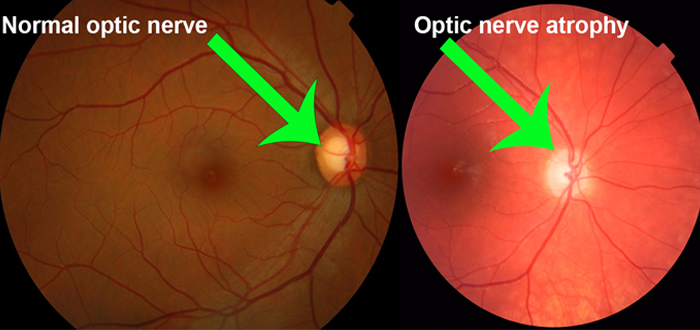
The optic nerve carries visual signals from the eye to the brain. In optic nerve atrophy, its nerve fibres are damaged or lost, so the nerve head looks pale on examination and vision becomes weaker. Both eyes or only one may be affected, and the loss may be sudden or gradual.
Common Causes
- glaucoma and other causes of raised eye pressure
- optic neuritis and demyelinating disease such as multiple sclerosis
- reduced blood supply to the nerve (ischaemic optic neuropathy)
- pressure from a tumour, swelling or head injury
- toxins, certain medicines and nutritional deficiencies, including low vitamin B12
- inherited forms such as dominant optic atrophy and Leber hereditary optic neuropathy (LHON)
Finding the cause early matters, because treating it can protect the vision that remains.
Symptoms and Diagnosis
Typical features are blurred or dim vision, washed-out colours, blind spots and a shrinking field of view. A specialist will usually advise visual acuity and colour vision tests, visual field testing, OCT of the nerve fibre layer, MRI of the brain and orbits, blood tests, and genetic testing when an inherited form is suspected.
Established Care vs Investigational Treatment
| Category | Status | What it involves |
|---|---|---|
| Treating the underlying cause | Standard of care | Controlling eye pressure, treating inflammation, relieving pressure on the nerve, correcting deficiency or toxin exposure |
| Monitoring and low vision support | Standard of care | OCT and field tests, magnifiers, lighting, contrast aids, mobility training |
| Gene-based and drug research for inherited forms | Approved for some forms in some countries; mostly clinical trials | Ask a neuro-ophthalmologist what applies to your genetic type |
| Stem cell treatment for optic atrophy | Investigational. Permitted only within approved clinical research | Early studies on protecting or supporting optic nerve cells |
What Stem Cell Research Shows
Researchers are studying whether mesenchymal stem cells or other cell types can protect optic nerve cells or support recovery. Human studies so far are small, often without control groups, and results vary. The optic nerve belongs to the central nervous system and regenerates poorly, so a proven, approved stem cell treatment for optic atrophy does not currently exist. Be cautious of anyone quoting a success rate. Our page on optic nerve damage explains our approach.
How Stem Cell Treatment Is Regulated in India
The National Guidelines for Stem Cell Research, 2017 issued by ICMR and the Department of Biotechnology state that any use of stem cells in patients, other than hematopoietic stem cell reconstitution for approved indications, is investigational. In September 2026 the Union Ministry of Health and Family Welfare also issued an advisory on regulation of stem cell therapy reiterating that routine clinical use is limited to officially approved indications.
- Ethics approval: investigational use needs ethics committee and institutional stem cell research committee oversight.
- CDSCO: stem cell-derived products are treated as new drugs, and clinical trials need permission.
- Registration: check any trial on the Clinical Trials Registry – India (CTRI).
- NMC: doctors are expected to avoid advertising unproven treatments as established therapy.
Rules are updated from time to time, so confirm the current position with the official sources listed at the end of this article.
Safety Around the Eye
Procedures involving the eye or optic nerve can cause infection, bleeding, raised eye pressure, retinal detachment and, in the worst cases, permanent loss of remaining vision. Serious harm has been reported after unregulated stem cell injections into the eye. Only agree to a procedure that is part of an approved protocol, performed by a qualified eye surgeon, with ethics committee approval and written informed consent. Always keep your own eye specialist informed, and do not stop current treatment on your own.
Cost Considerations
Costs in India are generally lower than in the USA, UK or Europe, but there is no single price. They depend on the condition, the protocol and cell source, the tests required, the number of sessions, hospital stay, and accommodation and travel. Ask for a written, itemised estimate stating what is included, and avoid large advance payments without documents.
How to Choose a Provider
- Ask which approved indication or registered trial covers your exact diagnosis, and verify it on CTRI.
- Confirm the treating doctors are registered ophthalmologists or retina specialists.
- Ask about cell source, laboratory standards and quality control.
- Be cautious of promises of restored vision, “cure” claims or quoted success percentages.
- Insist on informed consent documents and a written cost estimate.
- Ask for published data, not only testimonials.
Our patient checklist for choosing a genuine stem cell clinic in India covers this in more detail.
Frequently Asked Questions
Can optic nerve atrophy be cured?
In most cases lost nerve fibres cannot be restored with current treatment. Treating the cause can protect remaining vision.
Is stem cell treatment for optic atrophy approved in India?
Not as routine treatment. It is investigational and permitted only within approved, registered clinical research.
Will my vision come back after stem cell therapy?
There is no reliable evidence of this. Be cautious of promises of restored vision.
Which doctor should I see first?
An ophthalmologist or neuro-ophthalmologist, who can find the cause and arrange the right tests.
Is it safe to travel to India for treatment?
Safety depends on the facility and procedure. Verify credentials, approvals and consent before you travel.
Final Word
Optic nerve atrophy care begins with finding and treating the cause, protecting remaining vision and using low vision support. Stem cell research is an active area but remains investigational. Verify approvals, ask for documents and keep expectations realistic.
You can get an expert opinion or read about stem cell therapy in India, stem cell treatment in India, medical tourism in India and the medical visa process. Our stem cell treatment cost in India price guide explains cost factors.
More Official Sources
- Central Drugs Standard Control Organisation (CDSCO)
- National Medical Commission (NMC)
- Indian Council of Medical Research (ICMR)
- Overview of the National Guidelines for Stem Cell Research 2017 (PubMed Central)
- National Eye Institute (NEI)
Related Readings
- Optic Nerve Damage Treatment in India – urgent warning signs, causes and care options
- Stem Cell Therapy for Optic Nerve Damage – our approach and what to expect
- How to Choose a Genuine Stem Cell Clinic in India – a patient checklist before you decide
- Stem Cell Treatment Cost in India – what affects the total price
- Stem Cell Therapy in India – approved and investigational uses explained








The entire team was polite, supportive, and well-coordinated. I felt comfortable throughout the process and appreciated the personal attention and guidance provided by the staff. Overall, I am very happy with my experience at **Stem Cell Cure India** and would definitely recommend **Dr. Prashant Tyagi and his team** to anyone looking for professional and compassionate care.

The staff was also courteous, cooperative, and always willing to help. I truly appreciate the professionalism and personal attention provided throughout the journey. Overall, I had a very positive experience with **Dr. Prashant Tyagi and the entire Stem Cell Cure India team**. Highly recommended for their professional approach and supportive care.






I advise everyone to come and take a chance if suffering with this disease.
Thanks