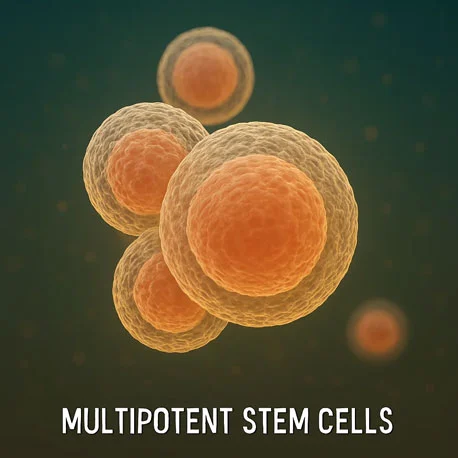
Multipotent stem cells are the most practical and widely used stem cells in current regenerative medicine. Unlike totipotent and pluripotent stem cells, which have extremely broad developmental potential, multipotent stem cells can differentiate into multiple specialized cell types within a specific tissue group. This controlled biological behavior makes them safer, more predictable, and clinically suitable for therapeutic applications.
Multipotent stem cells naturally exist in adult tissues and function as the body’s internal repair system. They help maintain tissue health by replacing damaged or aging cells and supporting natural regeneration. These cells are found in various sources, including bone marrow, adipose (fat) tissue, umbilical cord tissue, peripheral blood, and dental pulp.
The most commonly used multipotent stem cells in medicine are mesenchymal stem cells (MSCs) and hematopoietic stem cells. Hematopoietic stem cells produce different types of blood cells, while mesenchymal stem cells can differentiate into bone, cartilage, muscle, connective tissue, and nerve-supporting cells. MSCs are especially valuable because of their strong regenerative and immunomodulatory properties.
In ophthalmology, multipotent stem cells are primarily used for their supportive and protective effects rather than direct cell replacement. These cells release a wide range of bioactive molecules such as growth factors, cytokines, and anti-inflammatory agents. These substances help reduce oxidative stress, improve microcirculation, regulate immune responses, and promote cellular survival within retinal and optic nerve tissues.
At Stem Cell Cure India, multipotent stem cells form the core of regenerative treatment protocols. They are chosen because of their well-established safety profile, ethical acceptability, and strong scientific evidence. These cells are processed under controlled laboratory conditions and administered using protocols designed to maximize therapeutic benefits while ensuring patient safety.
One of the key advantages of multipotent stem cells is their ability to regulate inflammation. Chronic inflammation plays a major role in many degenerative eye diseases, including retinal dystrophies, optic neuropathies, and autoimmune-related vision disorders. Multipotent stem cells help create a balanced immune environment that supports tissue healing and slows disease progression.
Multipotent stem cells also contribute to improved tissue oxygenation and nutrient delivery by supporting vascular function. This enhances metabolic activity within retinal cells and helps maintain structural integrity of visual pathways. Additionally, they release anti-apoptotic signals that reduce programmed cell death, which is a major mechanism behind photoreceptor and optic nerve degeneration.
Clinically, the goal of multipotent stem cell therapy is not to regenerate destroyed retinal cells, but to preserve existing vision, stabilize disease progression, and improve functional visual performance. Many patients experience improved visual comfort, better contrast perception, reduced visual fatigue, and enhanced quality of life.
Before initiating therapy, patients at Stem Cell Cure India undergo comprehensive medical evaluation, including ophthalmic imaging, neurological assessment where required, and systemic health screening. This ensures that treatment is personalized, appropriate, and safe.
Treatment protocols are designed individually based on patient age, disease type, severity, and overall health condition. Continuous follow-up and monitoring are conducted to assess therapeutic response and long-term outcomes.
Multipotent stem cells represent the most clinically validated and widely accepted stem cell category in modern medicine. Their role in regenerative ophthalmology continues to expand as research advances.
At Stem Cell Cure India, multipotent stem cell therapy is delivered within an evidence-based, ethical, and patient-centered framework, focused on long-term vision preservation and functional improvement.
They can differentiate into related cell types.
Bone marrow, adipose tissue, umbilical cord.
Yes, they are widely used in clinical stem cell therapy.


