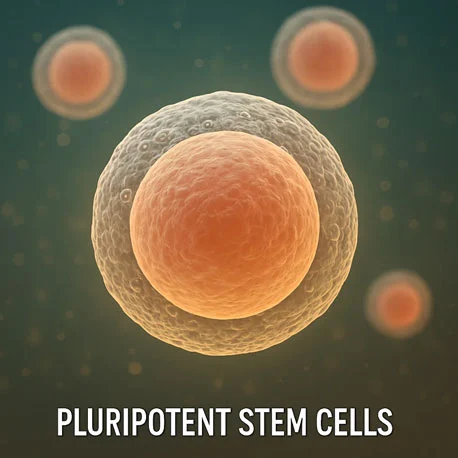
Pluripotent stem cells are a highly versatile category of stem cells that have the ability to differentiate into almost all specialized cell types of the human body. The term “pluripotent” means “many potentials,” which reflects their capacity to develop into cells originating from the three main germ layers: ectoderm, mesoderm, and endoderm. These germ layers give rise to tissues such as the brain, retina, muscles, heart, blood, skin, liver, and digestive organs.
In natural human development, pluripotent stem cells appear shortly after the earliest embryonic stage. As the embryo develops, cells gradually lose totipotency and become pluripotent, meaning they can no longer form extra-embryonic structures like the placenta but still retain the ability to generate all body tissues. Embryonic stem cells derived from the inner cell mass of a blastocyst are the most well-known naturally occurring pluripotent stem cells.
Another important form of pluripotent stem cells is induced pluripotent stem cells, commonly known as iPSCs. These are adult body cells, such as skin or blood cells, that are genetically reprogrammed in the laboratory to return to a pluripotent state. iPSCs behave similarly to embryonic stem cells and have become a major area of research because they eliminate the need for embryo-derived cells.
Pluripotent stem cells are extremely valuable in medical research. They are widely used to study disease mechanisms, test new drugs, and understand genetic disorders at a cellular level. In ophthalmology, pluripotent stem cells are being explored for their ability to generate retinal pigment epithelial cells, photoreceptors, and optic nerve support cells under controlled laboratory conditions.
Despite their scientific importance, pluripotent stem cells are not commonly used in routine clinical therapy. One of the main limitations is safety. Because these cells have a very high differentiation potential, they also carry a risk of uncontrolled growth if not precisely regulated. This can lead to abnormal tissue formation or tumor development, which poses a significant clinical risk.
Another challenge is immune compatibility. Embryonic pluripotent stem cells may trigger immune rejection when transplanted into a patient. Although iPSCs are derived from the patient’s own cells, the genetic reprogramming process itself may introduce instability or unexpected biological behavior.
Ethical considerations also play a role. The use of embryonic stem cells remains controversial in many countries due to moral and legal restrictions. As a result, most medical regulatory authorities limit the clinical use of pluripotent stem cells to controlled research environments and clinical trials.
At Stem Cell Cure India, pluripotent stem cells are not used in direct patient treatment protocols. The center focuses on stem cell types that have proven safety, ethical acceptance, and stable clinical outcomes. Patient treatments are based on medically approved and evidence-supported regenerative strategies.
However, pluripotent stem cells continue to shape the future of regenerative medicine. They provide a powerful platform for understanding how tissues form and how damaged organs may one day be regenerated. Their greatest contribution lies in research and innovation rather than current clinical practice.
For patients, it is important to understand that pluripotent stem cells represent potential rather than standard therapy. While ongoing research is promising, most applications remain experimental. At Stem Cell Cure India, all therapies are guided by current scientific evidence, regulatory compliance, and patient safety.
Pluripotent stem cells symbolize the bridge between basic biological science and future regenerative solutions. Their long-term impact will be seen in the development of more precise, safer, and personalized medical treatments in the years to come.
They can become almost any cell in the body.
Yes.
Some are used in advanced regenerative research.


