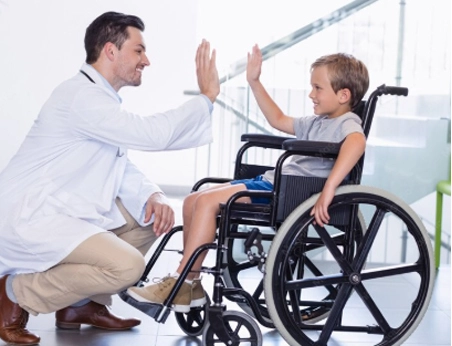
Cerebral palsy is a group of lifelong movement and posture disorders that arise from a non-progressive injury to the developing brain, most often around the time of birth. Its effects — ranging from mild stiffness to significant motor and communication challenges — vary widely from child to child, and the underlying brain injury itself does not change over time even as the child grows. Families across Pakistan often travel to India for specialist paediatric neuro-rehabilitation, and many also ask whether stem cell therapy has a role to play alongside physiotherapy, occupational therapy, and speech therapy. Stem Cell Cure India offers a case-by-case evaluation to help parents understand whether this may be relevant for their child, always alongside — never instead of — ongoing developmental therapy.
In Pakistan, access to intensive, multidisciplinary paediatric rehabilitation for cerebral palsy can be limited outside major cities, and waiting times for combined physiotherapy, occupational therapy, and neuro-developmental review are often long. Parents who have already invested years in therapy sometimes want a second opinion on whether an additional regenerative approach is worth exploring, alongside the therapy programme their child is already following at home.
Dr. Tyagi leads regenerative medicine protocol design at Stem Cell Cure India, overseeing stem cell sourcing, lab processing, and treatment planning for children being evaluated for cerebral palsy and other neuro-regenerative conditions.
Dr. Singh brings over three decades of clinical experience in general medicine and surgery, supporting the overall pre-treatment health assessment of children travelling from Pakistan for their stem cell therapy evaluation.
Mesenchymal Stem Cells (MSCs) are being studied for their potential anti-inflammatory and neuroprotective effects, and for a possible supportive role alongside intensive rehabilitation in some children with cerebral palsy. It is important for parents to set realistic expectations: the original brain injury underlying cerebral palsy is not currently known to be reversed by this or any other available treatment, and stem cell therapy is not a substitute for physiotherapy, occupational therapy, or speech therapy. This approach is explored strictly as a complement to — never a replacement for — the child's ongoing developmental therapy programme.
Suitability depends on the type of cerebral palsy, the child's age, current functional level, and the therapy already underway. Before travelling from Pakistan, our team reviews:
No. Cerebral palsy results from an existing brain injury, and stem cell therapy does not reverse that injury. It is explored as an option that may support functional gains alongside physiotherapy, occupational therapy, and standard developmental care — not as a cure.
This depends on the type and severity of cerebral palsy, the child's age, and current therapy history. Share the child's MRI report, developmental history, and current therapy plan so our team can give an initial opinion.
A recent MRI of the brain, a note on the type of cerebral palsy (spastic, dyskinetic, ataxic, or mixed), current GMFCS level if known, and a summary of ongoing physiotherapy or occupational therapy.
Most families stay between 7 and 10 days, depending on the diagnostic work-up and treatment plan required.
Yes. Once an evaluation is confirmed, our team provides the invitation letter and supporting documents needed for the Indian Medical Visa application, and guides families through the process step by step.
Cost depends on the child's condition, severity, and the plan required. Contact us for a personalised quote after sharing reports and medical history.
Source: These are real, verified Google reviews currently published on stemcellcure.in — pulled from our Google Business Profile (5.0★, 33+ reviews).
Contact Stem Cell Cure India today to share your child's medical history and get a personalised opinion on suitability.


