Optic nerve atrophy describes the loss of the nerve fibres that carry visual information from the retina to the brain. It is not a disease in itself but the end result of something else — long-standing glaucoma, an interrupted blood supply, a tumour or other mass pressing on the nerve, head injury, an inherited optic neuropathy, or inflammation. Ophthalmology worldwide treats the cause and protects whatever fibres remain; no accepted treatment brings back fibres that have already died. Patients across Pakistan who have been told their vision loss is permanent sometimes want to know whether regenerative medicine offers anything further, and Stem Cell Cure India provides an evaluation that answers that question honestly for the individual case.
Once atrophy has set in, the conversation in most eye clinics turns to protecting the remaining field of vision rather than improving it, which many patients find difficult to accept without seeking a further opinion. Detailed optic nerve imaging and neuro-ophthalmology input can also be hard to access in parts of Pakistan. Travelling to India lets patients combine that diagnostic work-up with a specialist discussion about whether a regenerative approach has any place alongside their glaucoma drops, neurological follow-up or other ongoing care.
Dr. Tyagi leads regenerative medicine protocol design at Stem Cell Cure India, overseeing stem cell sourcing, lab processing, and treatment planning for patients being evaluated for optic nerve and other neuro-regenerative conditions.
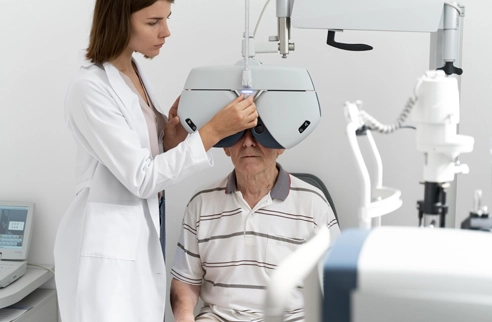
Dr. Pallavee contributes more than two and a half decades of ophthalmic surgical and clinical experience, and leads the eye assessment for patients travelling from Pakistan with optic nerve atrophy.
Mesenchymal Stem Cells (MSCs) are being studied for neuroprotective and anti-inflammatory properties, and for whether they might help surviving optic nerve fibres remain viable in certain chronic optic neuropathies. Where an evaluation concludes that treatment is reasonable, the route of administration — intravenous infusion or a targeted periocular approach — is decided individually after the eye assessment. What must be stated plainly is that nerve fibres already lost are not known to regenerate with this or any other treatment available today, so the realistic aim under discussion is support for what remains, alongside continued management of whatever caused the atrophy in the first place.
The cause of the atrophy, how long ago it developed, and how much usable vision is left all shape the answer. Before travel from Pakistan is arranged, our team reviews:
No. Nerve fibres that have died do not come back with stem cell therapy or with any other treatment available at present. The discussion is limited to whether remaining function might be supported, alongside treatment of the underlying cause.
Not at all. Glaucoma drops, surgery or any other treatment aimed at the underlying cause must continue under your own ophthalmologist. An evaluation here sits alongside that care and never in place of it.
A recent OCT scan, a visual field test, an MRI of the brain and orbits where relevant, and written confirmation of what caused the atrophy, along with details of treatment received so far.
Yes, it is one of the factors considered, along with the cause and how much functional vision remains. Cases are assessed individually rather than by a fixed cut-off.
Most patients are in Delhi for around 7 to 10 days, depending on which investigations are repeated here and what the plan requires.
It depends on the underlying cause, severity and what the plan involves, so a quote is prepared for each patient after the reports are reviewed.
Source: These are real, verified Google reviews currently published on stemcellcure.in — pulled from our Google Business Profile (5.0★, 33+ reviews).
Share your OCT, visual field results and diagnosis details with us, and our team will tell you honestly whether an evaluation is worth your while.


