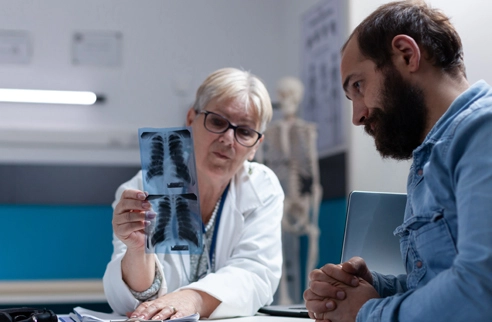
Chronic lung disease covers several conditions that make breathing progressively harder: COPD, where the airways narrow and lung tissue is destroyed; interstitial lung disease, where the tissue between the air sacs becomes scarred; bronchiectasis; and lasting damage after tuberculosis or severe pneumonia. Pakistan carries a high burden of several of these, driven by smoking, biomass fuel exposure in rural households, air pollution in the larger cities, and a substantial tuberculosis caseload. Standard pulmonology care aims to open the airways where possible, prevent infections and flare-ups, supply oxygen when required, and support patients through pulmonary rehabilitation. Stem Cell Cure India assesses whether stem cell therapy has any supporting role in an individual case.
Structured pulmonary rehabilitation programmes are uncommon outside a handful of centres in Pakistan, and patients with post-tuberculosis lung damage or established fibrosis are often told that inhalers and oxygen are all that remain. Those who find their breathlessness worsening despite full treatment frequently want a second opinion that includes updated lung function testing and imaging, together with a clear answer on whether regenerative approaches are worth considering alongside what they are already taking.
Dr. Tyagi leads regenerative medicine protocol design at Stem Cell Cure India, overseeing stem cell sourcing, lab processing, and treatment planning for patients being evaluated for chronic lung disease and other regenerative conditions.
Dr. Singh brings over three decades of clinical experience in general medicine and surgery, and reviews the general health and fitness for travel of patients arriving from Pakistan before treatment is planned.
Mesenchymal Stem Cells (MSCs) are being studied for anti-inflammatory and immunomodulatory effects, and for whether they might influence the inflammatory environment in some chronic lung conditions. The limits need stating clearly: lung tissue already destroyed in emphysema, and fibrosis already established in interstitial lung disease or after tuberculosis, are not known to be restored by stem cell therapy or by any other treatment available today. Nor does it replace inhalers, oxygen therapy, antifibrotic medication or pulmonary rehabilitation. It is considered only as a possible addition to properly delivered pulmonology care, and only where an individual assessment supports it.
The specific lung condition, how much function has been lost, and whether oxygen is already needed all shape the answer. Before travel from Pakistan, our team reviews:
No. Destroyed lung tissue and established fibrosis are not known to be restored by stem cell therapy or by any other available treatment. It is discussed only as a possible addition to inhalers, oxygen therapy and pulmonary rehabilitation.
Post-tuberculosis lung damage is among the conditions we review, provided the tuberculosis itself has been fully and successfully treated. Please send your treatment completion details along with your HRCT and lung function results.
That needs to be confirmed case by case. Fitness to fly with supplemental oxygen must be cleared by your treating physician in Pakistan before any travel is booked, and airlines have their own requirements.
Spirometry results, an HRCT chest scan, a recent chest X-ray, oxygen saturation or blood gas readings, and your current medication list.
Most patients plan for 7 to 10 days, allowing time for lung function testing here and a proper discussion of the findings.
It depends on the diagnosis, the severity and the plan required, so a quote is prepared individually after your reports are reviewed.
Source: These are real, verified Google reviews currently published on stemcellcure.in — pulled from our Google Business Profile (5.0★, 33+ reviews).
Send your spirometry results, HRCT scan and current medication list, and our team will give you a clear opinion on whether an evaluation makes sense.


