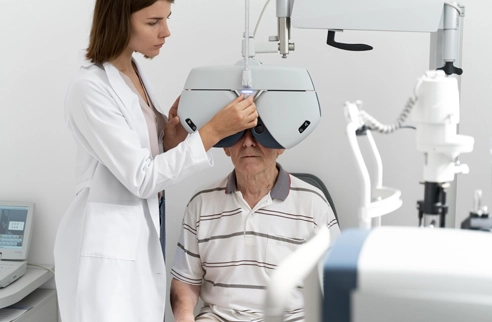
Optic nerve atrophy — the death or damage of nerve fibres that carry visual signals from the eye to the brain — can result from glaucoma, ischemic events, compressive lesions, trauma, hereditary conditions, or inflammatory optic neuropathy. Conventional ophthalmology focuses on treating the underlying cause and preserving remaining vision, but for patients who have exhausted standard options, some explore stem cell therapy as an additional avenue. Stem Cell Cure India offers an evaluation to help patients understand whether this approach may be relevant to their specific case, alongside — not instead of — ongoing ophthalmological care.
Once optic nerve fibres are damaged, treatment options in mainstream ophthalmology are limited mainly to managing the underlying cause and preventing further loss — there is currently no conventional treatment that restores already-lost nerve fibres. Patients who have been told “there is nothing more we can do” for their remaining vision sometimes look into regenerative approaches such as stem cell therapy as an additional option to discuss with a specialist, often combining this with advanced diagnostic evaluation available in India.
Dr. Tyagi leads regenerative medicine protocol design at Stem Cell Cure India, overseeing stem cell sourcing, lab processing, and treatment planning for patients being evaluated for optic nerve and other neuro-regenerative conditions.
Dr. Singh brings over three decades of clinical experience in general medicine and surgery, supporting the overall health evaluation of patients before and during their stem cell therapy journey. Ophthalmology-specific assessment is coordinated with affiliated eye specialists as part of the evaluation process.
Mesenchymal Stem Cells (MSCs) are being studied for their potential neuroprotective and anti-inflammatory effects, and for their possible role in supporting the survival of remaining optic nerve fibres in some chronic optic neuropathies. Administration route (such as intravenous infusion, or a targeted periocular approach) is determined case by case after specialist assessment. It is important to set realistic expectations: nerve fibres that have already been lost are not currently known to regenerate with this or any other available treatment. This approach is explored as a complement to — not a replacement for — standard ophthalmological management of the underlying cause.
Suitability depends on the cause, duration, and severity of optic nerve atrophy, and how much functional vision remains. Before travelling, our team reviews:
No. Optic nerve atrophy involves loss of nerve fibres that is generally considered permanent with currently available treatments, and stem cell therapy is not a cure. It is explored as an option that may help support remaining nerve function and slow further decline, alongside standard ophthalmological care.
This varies by individual. Please share your OCT scan, visual field test, and diagnosis history so our team can give an initial opinion on whether an evaluation makes sense in your case.
Recent OCT scan, visual field test, relevant MRI report, and details of your diagnosis and any prior treatment. This allows our team to give an initial opinion before you commit to travel.
Most patients stay between 7 and 10 days, depending on the diagnostic work-up and treatment plan required.
Yes. Once an evaluation is confirmed, we provide the invitation and supporting documents needed to apply for a Medical Visa.
Cost depends on the specific condition, its severity, and the plan required. Contact us for a personalised quote after sharing your reports and medical history.
Source: These are real, verified Google reviews currently published on stemcellcure.in — pulled from our Google Business Profile (5.0★, 27 reviews).
Contact Stem Cell Cure India today to share your medical history and get a personalised opinion on suitability.


