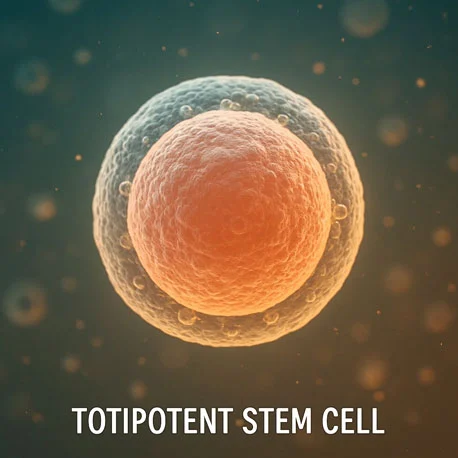
Totipotent stem cells are the earliest and most powerful form of stem cells found in human biology. The word “totipotent” means “total capacity,” which refers to their unique ability to develop into every type of cell in the human body. This includes all specialized body cells such as nerve cells, muscle cells, blood cells, retinal cells, and even supporting structures like the placenta and umbilical tissues required for fetal development.
Totipotent stem cells exist only during the very first stage of life. They are present immediately after fertilization, when the sperm and egg combine to form a single cell known as a zygote. During the first few cell divisions, each resulting cell remains totipotent. At this stage, every cell has the complete biological potential to independently develop into a full human organism under natural conditions.
From a scientific standpoint, totipotent stem cells are essential for understanding how life begins and how complex tissues and organs form from a single cell. They provide critical insights into genetic programming, cellular signaling, and developmental biology. Researchers study totipotent cells to better understand congenital disorders, embryonic development, and the basic mechanisms of cell specialization.
However, despite their remarkable biological abilities, totipotent stem cells are not used in clinical regenerative medicine. Their existence is limited to early embryonic stages, making them inaccessible for therapeutic harvesting. In addition, ethical and legal guidelines strictly restrict the use of totipotent cells in medical treatment, as their manipulation involves early human embryos.
Another major reason totipotent stem cells are not suitable for therapy is safety. Because these cells can transform into any tissue type without restriction, they lack biological control. If used in a clinical setting, they could potentially form unpredictable or abnormal tissue structures. This makes them unsuitable for controlled regenerative applications.
At Stem Cell Cure India, totipotent stem cells are not used in patient treatments. All regenerative therapies are based on stem cell types that are ethically approved, clinically safe, and supported by scientific research. Totipotent cells remain a subject of laboratory research rather than practical medical therapy.
Understanding totipotent stem cells is still important for patients, as it helps distinguish between theoretical stem cell science and real-world clinical treatments. Many online sources create confusion by suggesting that all stem cells can regenerate any organ or cure any disease. In reality, only specific stem cell categories are suitable for therapeutic use, and totipotent stem cells are not among them.
In modern medicine, totipotent stem cells mainly contribute to foundational scientific knowledge. They help researchers understand how cellular identity is established and how genetic instructions guide tissue formation. This research indirectly supports the development of safer and more targeted regenerative therapies used today.
At Stem Cell Cure India, transparency and patient education are key principles. Patients are informed about which stem cell types are used clinically and which remain limited to research. This ensures realistic expectations, ethical compliance, and responsible medical practice.
Totipotent stem cells represent the starting point of human development and the highest level of cellular potential. While they are not used in regenerative treatments, their biological significance continues to shape the future of stem cell science and medical innovation.
They can form all cell types, including placenta.
In the earliest stages of embryo development.
No, mainly used in research.


